The PASS Training Marketplace
OSHA – Confined Space - Agriculture
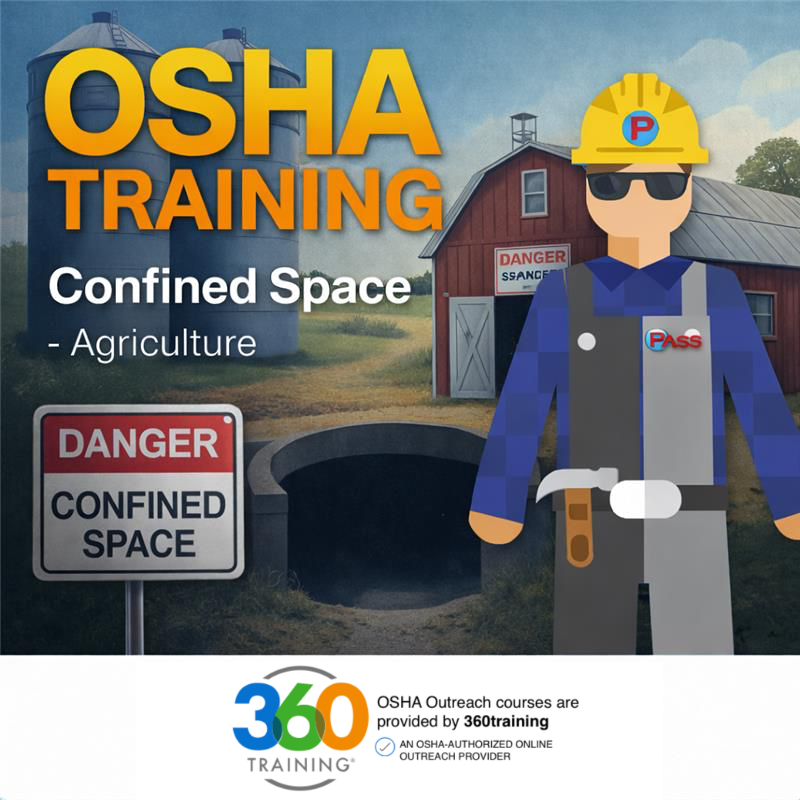
Product Description
OSHA Confined Space – Agriculture Online Training
Provided by 360Training
This Confined Space for Agriculture course is provided by 360Training and offered through PASS Training & Compliance. Designed specifically for agricultural operations, this training helps employers and workers recognize, evaluate, and control the serious hazards associated with confined spaces such as grain bins, silos, manure pits, storage tanks, and other enclosed or partially enclosed areas.
The course delivers OSHA-aligned instruction covering hazard identification, oxygen-deficient and toxic atmospheres, engulfment risks, permit-required confined space determination, atmospheric monitoring, safe entry procedures, and rescue planning. Participants will also learn the roles and responsibilities of entrants, attendants, supervisors, and employers in maintaining a safe confined space program.
Aligned with applicable OSHA standards including 29 CFR 1910.146 and related requirements, this online training strengthens safety awareness and supports regulatory compliance in agricultural settings.
The course is delivered in a convenient, self-paced online format and includes a final exam. Upon successful completion, learners receive a certificate of completion. Through the PASS platform, employers can easily assign, track, and document training to support their overall safety and compliance program.
Ideal for agricultural workers, supervisors, and safety personnel who work in or around confined spaces.
Confined Space for Agriculture Online Training
Provided by 360training
Confined Space for Agriculture Online Training, provided by 360training and offered through PASS on their behalf, is designed to help agricultural employers and workers understand and manage the serious hazards associated with confined spaces in agricultural settings. Agricultural confined spaces—including grain bins, silos, manure pits, storage tanks, and similar enclosed or partially enclosed areas—present significant risks due to limited entry and exit points, restricted ventilation, and the potential presence of hazardous atmospheres.
This course delivers industry-specific safety guidance aligned with OSHA standards. Participants will learn how to identify and explain confined spaces commonly found in agricultural operations and evaluate the risks associated with oxygen-deficient atmospheres, toxic gases, engulfment hazards, and other dangerous conditions. The training also covers how to determine whether a confined space requires a permit, classify confined spaces properly, and implement appropriate entry procedures.
Learners will gain the knowledge necessary to establish and enforce confined space safety policies, plan and implement safety precautions prior to entry, and understand the responsibilities of employees, supervisors, attendants, and entry supervisors. The course further addresses atmospheric monitoring, safe operational protocols, and rescue methods, helping organizations strengthen emergency preparedness and response planning.
This training is aligned with OSHA standard requirements, including:
- OSHA 29 CFR 1910 – General Industry
- 29 CFR 1910.146 – Permit-Required Confined Spaces
- 29 CFR 1910.134 – Respiratory Protection
- OSHA 29 CFR 1926 Subpart AA – Confined Spaces in Construction
- OSHA 29 CFR 1915 Subpart B – Shipyards
Estimated course duration is approximately 120–150 minutes. Upon successful completion, participants may immediately download and print their certificate of completion.
Through the PASS platform, organizations can assign, manage, and document this agriculture-specific confined space training as part of their overall safety and compliance program.
- Final Exam
- Yes
- Final Exam Passing Score
- 80%
- Certificate
- Yes
- Average Rating
- / 0 Reviews
Basic Tools Chapter 1
This chapter introduces the fundamental tools commonly used during confined space operations in agricultural settings. Participants will learn how to properly select and utilize essential entry and support tools to promote safe access and task completion. Emphasis is placed on understanding tool limitations, ensuring compatibility with confined space environments, and recognizing how improper tool use can increase risk.
Equipment Inspection Chapter 2
This chapter focuses on the importance of thorough equipment inspection prior to confined space entry. Learners will review inspection procedures for monitoring devices, ventilation systems, retrieval equipment, and entry hardware to ensure proper functionality. The training highlights how routine inspection and maintenance help prevent equipment failure and reduce the likelihood of serious incidents.
Atmosphere Monitoring and Testing Chapter 3
Participants will learn proper procedures for atmospheric testing in agricultural confined spaces such as grain bins, silos, and storage tanks. This section explains how to measure oxygen levels, detect toxic gases, and identify flammable atmospheres. The importance of pre-entry testing, continuous monitoring, and proper calibration of gas detection equipment is emphasized to maintain safe working conditions.
Safe Operations Chapter 4
This chapter outlines the safe work practices required for confined space entry and operations. Topics include hazard assessment, communication procedures, entry supervision, and adherence to established safety policies. Learners will understand how following structured operational protocols helps control risks and maintain regulatory compliance.
Protocols for Accessing Tight Spaces Chapter 5
This chapter addresses the procedures and precautions necessary for entering and exiting tight or restricted agricultural spaces. Participants will review planning requirements, securing entry points, maintaining clear access routes, and ensuring attendants are properly positioned. The section reinforces the need for controlled access and clear coordination during confined space activities.
Common Hazards Such as IDLH Atmospheres Chapter 6
Learners will examine the most frequent hazards associated with agricultural confined spaces, including Immediately Dangerous to Life or Health (IDLH) atmospheres, oxygen deficiency, toxic exposure, engulfment risks, and mechanical hazards. This section emphasizes hazard recognition and preventive measures to minimize the risk of injury or fatality.
